
How to make sauerkraut step by step
How to make sauerkraut step by step
Is it easy to ferment cabbage at home?
Yes, it is! Anyone can do it. Just follow my step by step guide.
Stick to one crucial rule to make sure your cabbage does not go mouldy!
Fermented cabbage - health benefits
Fermented cabbage or sauerkraut offers numerous health benefits, including:
improved digestion,
a stronger immune system,
reduced inflammation.
Sauerkraut is rich in beneficial bacteria (probiotics), fiber and antioxidants like vitamins C and E which support gut health nutrient absorption and overall well-being.
But first of all it tastes amazing! Both the cabbage and the juice form it, so next time you have some sauerkraut make sure you drink the juice too.
I noticed that each time my children have too many sweets or processed foods they ask for some fermented cabbage, which seems to be a form of the body asking for good foods to maintain the balance.
Let’s go!
The gear
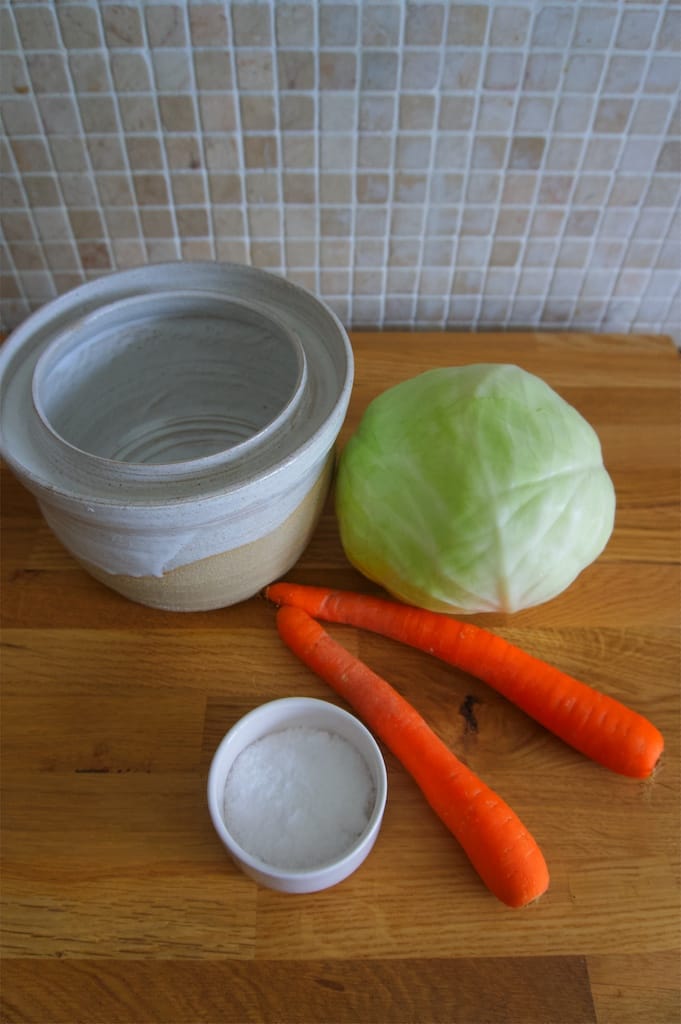
You will need a clay dish (easy to get in charity shops or junk shops for next to nothing, as most people don’t know what to use them for) or a large jar. You do not need a lid for that. My container is approx 1,75 litre.
The ingredients
1 cabbage head, 2 carrots and 20 grams of good quality salt (avoid the cheapest supermarket one and the fine table salt containing anti-caking agents) per 1 kilogram of cabbage.
Preparation
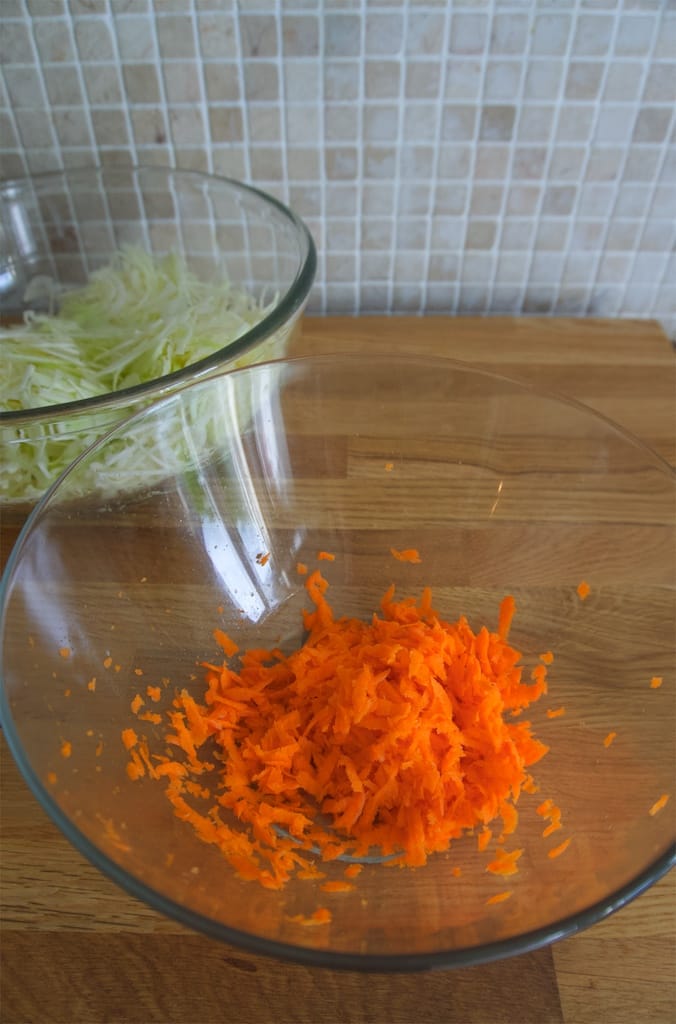
Wash and dry your carrots. Grate them on large holes grater and set them aside.
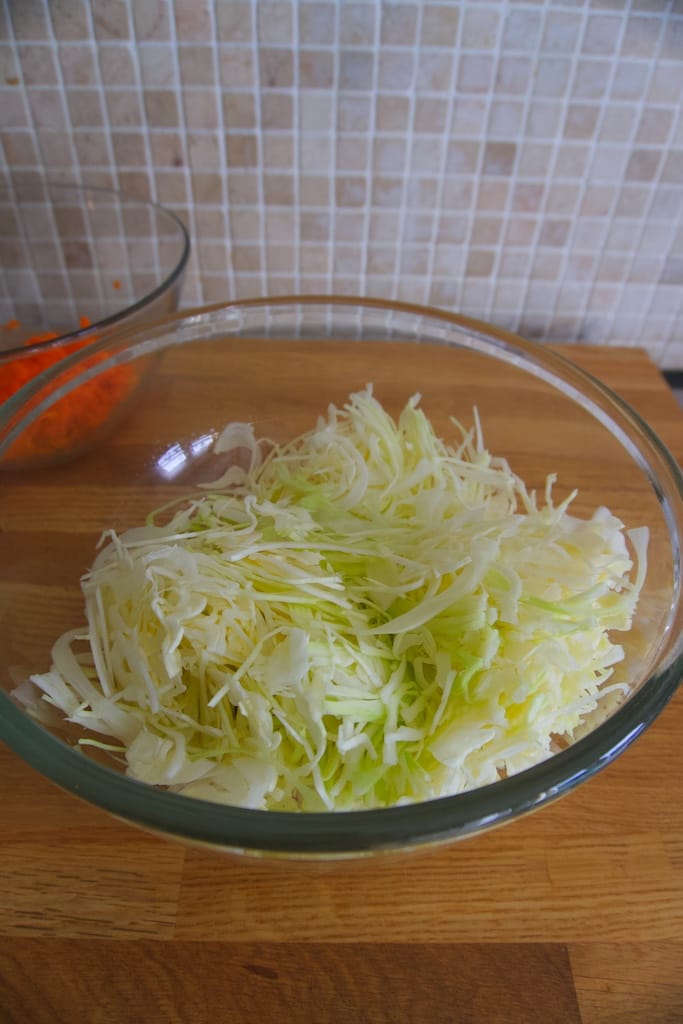
Wash and dry your cabbage. Cut it into halves, place the cut side down on chopping board and using a sharp knife slice it finely. Make sure the slices are as fine as possible. Alternatively you can use a shredder if you have one.
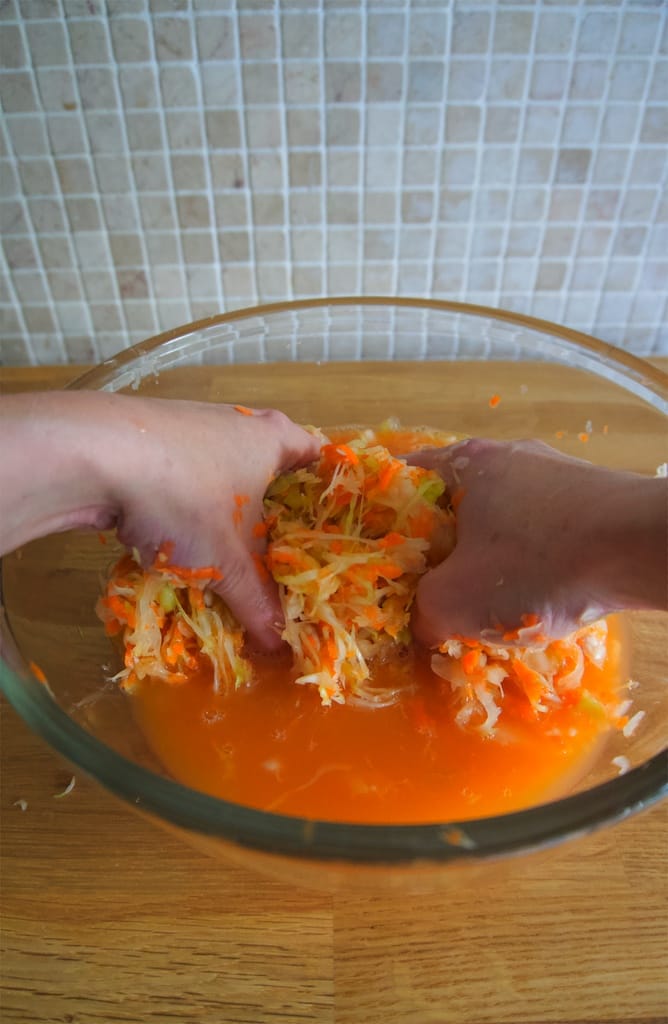
Add each batch of slices to a large bowl, a handful of grated carrots and sprinkle with some salt. Once all the cabbage, carrots and salt are in, squeeze and massage the cabbage with your hands until it starts to release juice. Continue for about 5-10 minutes until you feel there is no more juice coming out.
Jarring
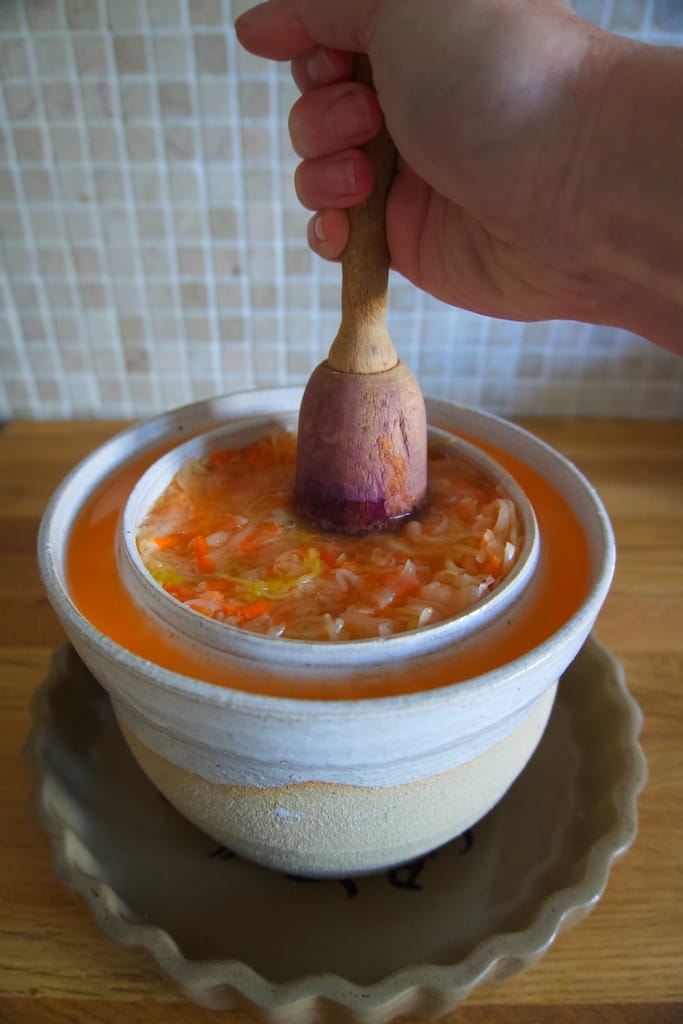
Add a handful of cabbage to the container/a jar and press it down with your hand or a wooden spoon (if the opening is too small for your hand). Repeat the procedure until all the cabbage is in. Press it down firmly and add the remaining juice on top.
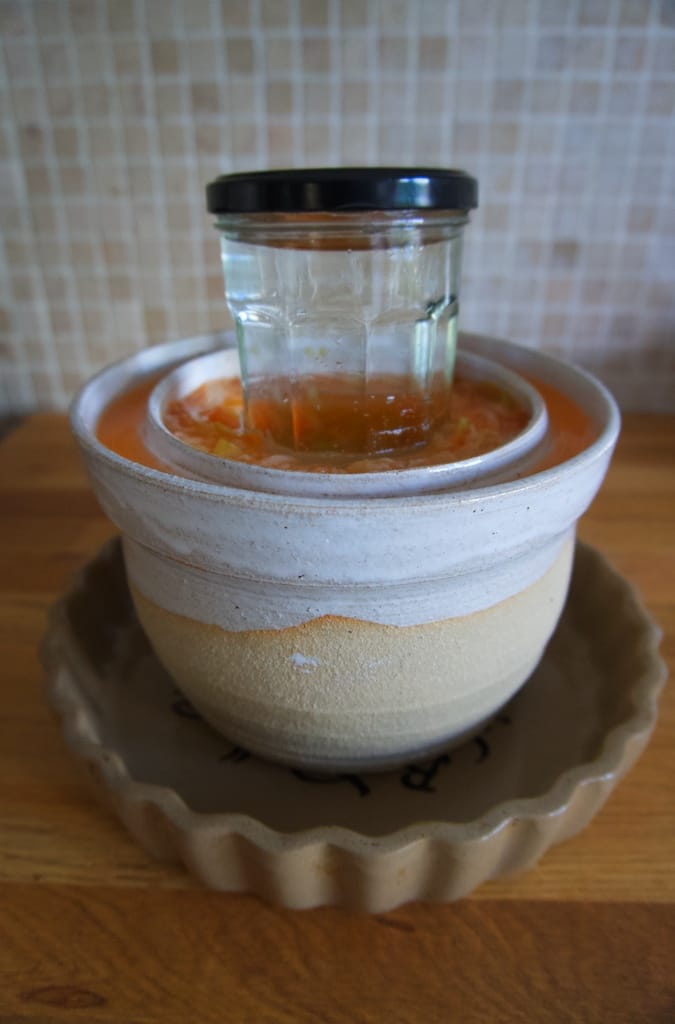
Prepare a small jam jar, fill it with water and place on the cabbage. Press it down firmly until the juice goes above the level of the cabbage. The important bit is that the cabbage is always covered with the juice, otherwise it might go mouldy. In case there is not enough juice, dilute 1 teaspoon of salt in 1 cup of water and add it on top.
Storing
Place your container/jar in a shallow dish or plate in case the juice bubbles up a lot overnight and overflows. If it does, discard the juice form the plate, clean it and the bottom of the container/jar and put the container back into the plate
Fermenting - day 2
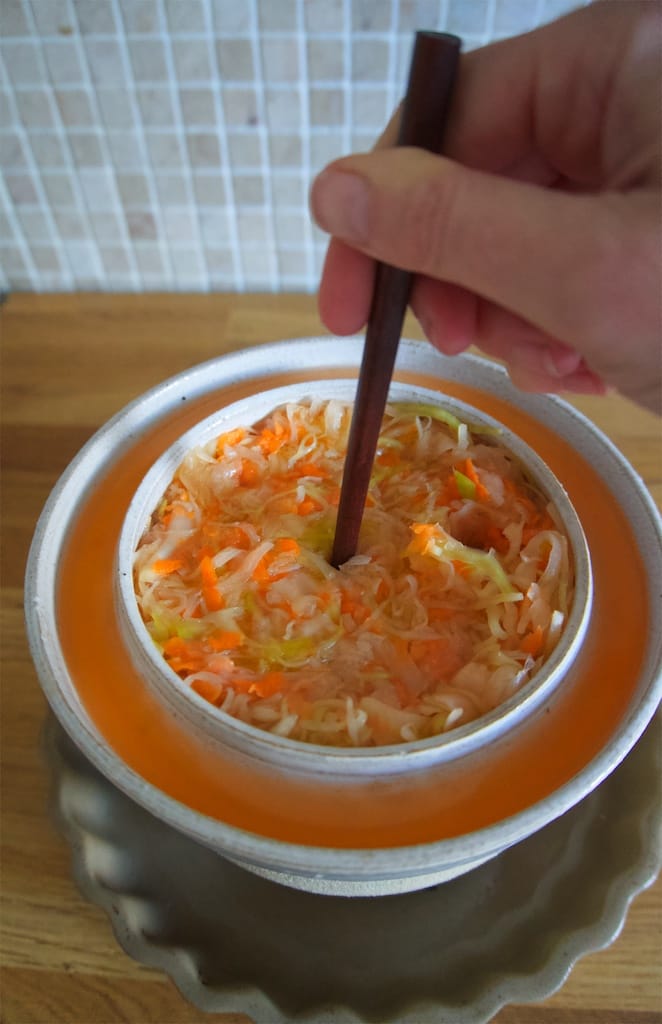
Remove the jar with water and poke the cabbage with a wooden skewer or a chopstick down to the bottom to make sure the gas is released. Otherwise your cabbage might go bitter. Repeat the procedure for the next 3 days.
Tasting
On day 6-7 you can start to have a taste of your cabbage. If you like the flavour, it means the cabbage is good to eat. Get your cabbage out with a wooden fork or tongs, avoid using metal utensils, and place the jam jar with water back. When the level of your cabbage goes significantly down, transfer it to a smaller jar, cover with a lid and keep in the fridge. It will slow the fermentation process down and keep your cabbage good to eat for another 2-3 weeks.
For more fermented food recipes check out my red cabbage and fermented beetroot juice.
Also, learn how to tell the difference between correct fermentation and mould here.




Created with © systeme.io